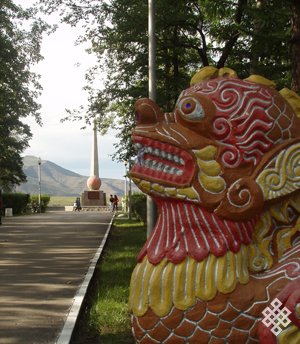
In Kyzyl, the capital of Tuva, on the picturesque shore near the confluence of the Bii-Khem and Kaa-Khem rivers, which give the origin to the Great River Ulug-Khem, there stands a majestic obelisk: Center of Asia”. There is deep significance in the name of the obelisk: Tuva is at the maximum distance from the world’s oceans; it means that it is at the geographic center of the Asian continent. Since times immemorial, this area has been the crossroads and meeting place of cultural traditions of the East and West, of the North and South; this is where mutual influence and mutual enrichment of different cultures took place.
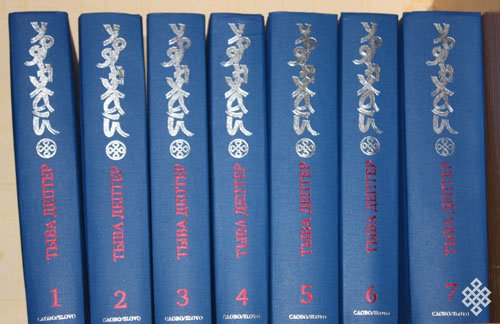
In connection with the recent presentation of the seven-volume anthology “Uriangkhai. Tyva Depter.”, edited by Sergei Shoigu, I would like to demonstrate the value of this entire project by a single example of a rare publication included in this anthology – namely a translation of Otto Maenchen-Helfen’s book “Journey to Tuva”. The anthology presents, together with other interesting scholarly works, the first published translation into Russian language of the book of an Austrian German, Otto Maenchen-Helfen, who was a social democrat in his political convictions. It can be stated without any exaggeration that the author of this relevant translation, aide to the Chairman of the Government of Republic Tuva, Dina Oyun, produced a magnificent contribution to the study of a multitude of problems in the more recent history of Tuva. She translated the” Foreword” to the 1992 USA edition, written by the Austrian scholar’s wife, Anna Maenchen, from English, and the entire book “Journey to Tuva” from the German original, which was first published in Berlin almost 80 years ago.
We are observing 98 years from the birth of prominent Russian historian – ethnologist, poet, translator, founder of the passionary theory of ethnogenesis, researcher of nomadic cultures of Eurasia, Lev Gumilev. He was born in Tsarskoye Selo on October 1, 1912. He was son of poets Nikolai Gumilev and Anna Akhmatova. As a child he was brought up by his grandmother in Slepnevo of Bezhetsk district of Tver gubernia. From 1917 to 1929 he lived in Bezhetsk, and from 1930 in Leningrad. During the years 1930-1934 he worked in expeditions in the Sayans, the Pamir and in Crimea. From 1934 he matriculated at the department of history of Leningrad University. In 1935 he was expelled from the university and arrested, but after some time he was released. In 1937 he was reinstated at the university.
«Производство лыж, ремней, армейских полушубков, которые раньше ввозились из СССР, в настоящее время освоилось промышленностью республики, и эти товары вывозятся. Промышленность Тувы в военное время должна удовлетворить потребность населения в товарах полностью и может хоть частично высвободить промышленность и транспорт СССР от поставки товаров в республику». Эти строки опубликованы 11 января 1942 года в газете «Тувинская правда». В год 65-летия Великой Победы наш Центральный государственный архив отмечает свое 80-летие. За эти годы в его фондах собрано богатейшее наследие, но самые волнующие документы архива – те, что свидетельствуют о военной поре 1941–1945 годов.
Как сообщил "КоммерсантЪ", генеральный директор телекомпании "Останкино", ведущий передачи "Человек и закон" Алексей Пиманов пойдет в Совет Федерации ФС РФ от тувинского парламента. На этом посту он заменит Людмилу Нарусову, которая в августе стала сенатором от Брянской области. "Тувинская правда" публикует его беседу с главными редакторами тувинских газет во время его визита в Кызыл. "Он любит свою работу, не считает себя только журналистом или режиссером, отлично разбирается в политике, футболе. Все, что связано с Центральной Азией, его влечет. Не боится критиковать кого угодно, прямо и открыто заявляет: «Я по роду своей профессии помогаю людям. Все свои возможности, а они немалые, направлю на то, чтобы помочь Туве».