Soon, throat-singers may be equal in their rights with ballet masters and opera singers. On April 6 president of Russia Dmitri Medvedev confirmed the list of directives after a meeting with cultural workers on March 24, 2011. The document contains a significant point concerning Tuvan throat-singers. The ministry of health care and social development and the ministry of culture of Russian Federation were given the task to review the matter of giving vocal artists - Tuvan throat-singers - the right to receive their pension early and to take appropriate measures. The deadline is 1 September 2011.
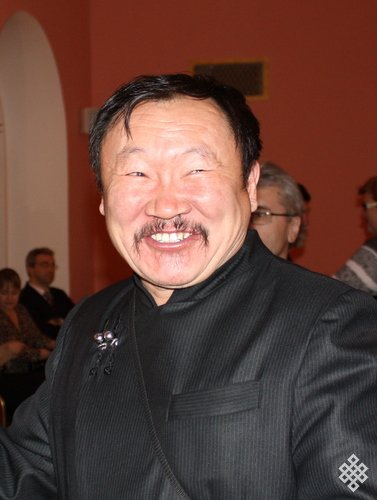
The question about the necessity of early retirement for throat-singers was raised by a well-known throat singer, Honored artist of Russia Kongar-ool Ondar during a meeting of the president with culture figures.
As a basis for the initiative, he explained to the head of the country about the work of the vocal cords, respiratory system and the resonator system of Tuvan vocalists.
In May of 2012, there will be an exhibition of the unique finds from the Scythian era burial, found in Tuva in 2001 by archeological expedition of the Hermitage, at the National Museum of Hungary, according to information of ITAR-TASS.
The agreement about exhibiting the Scythian gold from Center of Asia in Budapest was concluded by the Honorary Director of the Hungarian National Museum Fodor Istvan and the General Director Laszlo Csorba. Work has started in Kyzyl to prepare this export exhibition. Only a small proportion of the objects found in Tuvan kurgan Arzhaan-2 will be taken to Hungary. The Hungarians will see objects found in Tuvan kurgan Arzhaan-2 - jewellery artifacts, chains and pendants made in the Scythian animal style, coins, dishes, weapons, knives, quiver for arrows and other belongings of the royal personages who lived in the 5th century before our era.
At the 12th Congress of the Khakass nation, which took place on 18 March, the participants confirmed a list of sacral locations in Khakassia. Director of Khakass scientific research institute of language, literature and history, Doctor of historical studies Valentina Tuguzhekova explained to the correspondent of "Abakan" why such a list is necessary and which objects are included on the list.
The creation of such a list is necessitated by socio-economic changes of the past several years. Today it is possible for private entities to rent huge territories (taiga, fields, etc.), where objects sacred to the Khakass people may be located. And it is necessary to do everything possible for these places to remain accessible for performance of ritual practices. At this congress, we have confirmed this list of 96 sacral locations of the Khakass nation, and we will submit it to the Supreme Council of the republic. We hope that in the future, under the law about historical-cultural heritage, the sacral places of Khakass people will be taken under the protection of the government.
Редакция «ЦА» вот уже 20 лет, с самого рождения газеты, реализует проект «Люди Центра Азии – многонациональная семья»: из номера в номер публикует интервью и очерки о людях, живущих в республике в центре Азии либо связанных с нею. Эти материалы затем публикуются в книге «Люди центра Азии». Проект неоднократно отмечался на конкурсах республиканского и российского уровня. В 2010 году редакция стала обладателем гранта Председателя Правительства Тувы в области СМИ и журналистики. Героями публикаций становятся самые разные люди – чабаны и ученые, ветераны Великой Отечественной войны и политики, артисты и священнослужители…
В четвертый том книги «Люди Цента Азии» вошли 115 очерков и интервью.